Accreditation Statement
Rockland Community College, State University of New York, is accredited by the Middle States Commission on Higher Education (MSCHE), an institutional accrediting agency recognized by the U.S. Secretary of Education and the Council for Higher Education Accreditation (CHEA).
Middle States Commission on Higher Education
1007 North Orange Street
4th Floor, MB #166
Wilmington, DE 19801
Phone: 267-284-5011
Authorization to Award Degrees
Rockland Community College is authorized by the New York State Board of Regents to award:
- Associate in Arts (AA)
- Associate in Science (AS)
- Associate in Applied Science (AAS)
- Selected Certificate Programs
Program-Specific Accreditation and Approval
In addition to institutional accreditation, the following programs hold specialized accreditation or approval:
- Nursing (AS)
Accredited by the Accreditation Commission for Education in Nursing (ACEN)
3390 Peachtree Road NE, Suite 1400, Atlanta, GA 30326 - Occupational Therapy Assistant (AAS)
Accredited by the Accreditation Council for Occupational Therapy Education (ACOTE) of the American Occupational Therapy Association (AOTA)
7501 Wisconsin Avenue, Suite 510E, North Bethesda, MD 20814
Phone: 301-652-6611 - Legal Studies (AS)
Approved by the American Bar Association, Standing Committee on Paralegals
321 N. Clark Street, Mail Stop 19.1
Chicago, IL 60654-7598
Phone: 312-988-5618 - Campus Fun & Learn
Accredited by the National Early Childhood Program Accreditation (NECPA)
Complaints and Third-Party Comments
MSCHE requires institutions to maintain appropriate grievance procedures and expects concerns to be addressed through institutional channels whenever possible.
Complaints regarding Rockland Community College’s compliance with MSCHE requirements may be submitted directly to the Commission in accordance with its published policies. During periods of self-study review, interested parties may also submit third-party comments to MSCHE.
To submit a complaint, use the Complaints and Third-Party Comments Form.
Additional complaint submission options are available through:
- The State University of New York student concerns portal
- The New York State Education Department complaint portal
Middle States Accreditation and Self-Study
MSCHE conducts periodic peer review of accredited institutions to ensure compliance with accreditation standards and to promote continuous improvement. As part of this process, institutions complete a comprehensive self-study.
- Rockland Community College’s accreditation was reaffirmed on June 22, 2017
- The College initiated its current self-study process in Fall 2023
- The review will conclude in Spring 2026 with a peer evaluation visit and Commission action
Standards for Accreditation
Standard I: Mission and Goals
The institution’s mission defines its purpose within the context of higher education, the students it serves, and what it intends to accomplish. The institution’s stated goals are clearly linked to its mission and specify how the institution fulfills its mission.
Standard II: Ethics and Integrity
Ethics and integrity are central, indispensable, and defining hallmarks of effective higher education institutions. In all activities, whether internal or external, an institution must be faithful to its mission, honor its contracts and commitments, adhere to its policies, and represent itself truthfully.
Standard III: Design and Delivery of the Student Learning Experience
An institution provides students with learning experiences that are characterized by rigor and coherence at all program, certificate, and degree levels, regardless of instructional modality. All learning experiences, regardless of modality, program pace/schedule, level, and setting are consistent with higher education expectations.
Standard IV: Support of the Student Experience
Across all educational experiences, settings, levels, and instructional modalities, the institution recruits and admits students whose interests, abilities, experiences, and goals are congruent with its mission and educational offerings. The institution commits to student retention, persistence, completion, and success through a coherent and effective support system sustained by qualified professionals, which enhances the quality of the learning environment, contributes to the educational experience, and fosters student success.
Standard V: Educational Effectiveness Assessment
Assessment of student learning and achievement demonstrates that the institution’s students have accomplished educational goals consistent with their program of study, degree level, the institution’s mission, and appropriate expectations for institutions of higher education.
Standard VI: Planning, Resources, and Institutional Improvement
The institution’s planning processes, resources, and structures are aligned with each other and are sufficient to fulfill its mission and goals, to continuously assess and improve its programs and services, and to respond effectively to opportunities and challenges.
Standard VII: Governance, Leadership, and Administration
The institution is governed and administered in a manner that allows it to realize its stated mission and goals in a way that effectively benefits the institution, its students, and the other constituencies it serves. Even when supported by or affiliated with a related entity, the institution has education as its primary purpose, and it operates as an academic institution with appropriate autonomy.
Requirements of Affiliation
To be eligible for, to achieve, and to maintain Middle States Commission on Higher Education accreditation, an institution must demonstrate that it meets our requirements of affiliation. Compliance is expected to be continuous and will be validated periodically, typically at the time of institutional self-study and during any other evaluation of the institution’s compliance. Once eligibility is established, an institution then must demonstrate on an ongoing basis that it meets the standards for accreditation.
1. The institution is authorized or licensed to operate as a postsecondary educational institution and to award postsecondary degrees; it provides written documentation demonstrating both. Authorization or licensure is from an appropriate governmental organization or agency as required by each of the jurisdictions, regions, or countries in which the institution operates.
- Institutions that offer only postsecondary certificates, diplomas, or licenses are not eligible for accreditation by the Middle States Commission on Higher Education.
- The institution is operational, with students actively enrolled in its degree programs.
- For institutions pursuing candidate for accreditation status or the grant of accreditation, the institution will graduate at least one class before the team visit for the grant of accreditation takes place, unless the institution can demonstrate to the satisfaction of the Commission that the lack of graduates does not compromise its ability to demonstrate that students have achieved appropriate learning outcomes.
- The institution must communicate with the Commission in English, both orally and in writing, including all accreditation materials to support the multi-level accreditation decision-making process.
Self-Study Steering Committee
Steering Committee
Core Team
Co-Chairs:
- Matthew Matcovich, Professor of Mathematics
- Melissa L. Roy, JD, Chief Diversity Officer
Accreditation Liaison Officer:
- Dr. Ian Wolf, Chief of Staff
Assessment Coordinator:
- Nancy Koester, Associate Director of Institutional Research & Effectiveness
Standards’ Working Group Co-Captains
Standard I – Mission and Goals:
- Dr. Rachel Mead, Dean for Career and Workforce Innovation
- Diana Carey, Professor of Exercise & Human Performance
Standard II – Ethics and Integrity:
- Talia Lipton, Assistant Professor of Communications Studies
- Elizabeth Troutner, Coordinator of Student Activities & Volunteer Services
- Deborah Vinecour, Esq., Professor of Paralegal Studies
Standard III – Design and Delivery of the Student Learning Experience:
- Doreen Zarcone, Associate Director, Workforce Innovation
- Dr. Nancy McMorrow, Assistant Professor of Nursing
Standard IV – Support of the Student Experience:
- Dr. Angela Northrup, Assistant Professor and Program Director of Nursing
- Michael Albin, Director of Student Involvement
Standard V – Educational Effectiveness Assessment:
- Christina Merriweather, Executive Director of Student Engagement and College Life
- James Lee, Instructor and Program Director of Art/ Communication Media Arts
Standard VI – Planning, Resources, and Institutional Improvement:
- Dr. Melanie Rie, Associate Provost
- Patricia Szobonya, Esq., Professor & Program Director of Legal Studies, Criminal Justice Studies, Legal Studies/Paralegal Studies
Standard VII – Governance, Leadership, and Administration:
- Peter Arvanites, Professor of Mathematics
- Susanna Santiago, Student Engagement and Campus Involvement Specialist
Compliance Verification Captain:
- Madelene Aponte, Director of Financial Aid
Self-Study Working Groups
Standard I: Mission and Goals
Co-Captains:
- Rachel Mead, Dean for Career and Workforce Innovation
- Diana Carey, Professor of Exercise & Human Performance
Working Team:
- Christian Cea, Campus Security Aide
- Jeremy Cordock, Data Entry Operator, Institutional Research & Effectiveness
- Kristen Kolka, Associate Professor of Mathematics
- David Lucander, Associate Professor of Multicultural Studies
- Patricia Maloney-Titland, Distinguished Professor/Dean, School of Arts, Education, Humanities, and Social Sciences
- Yonaira Sanchez, Program Assistant for Student Involvement
- L’Tanya Watkins, Board of Trustees Member
Standard II: Ethics and Integrity
Co-Captains:
- Talia Lipton, Associate Professor of Communications Studies
- Elizabeth Troutner, Coordinator of Student Activities & Volunteer Services
- Deborah Vinecour, Professor of Paralegal Studies
Working Team:
- Allegrah Abrahams, Assistant Registrar
- Kathleen Carroll, Counselor/Professor
- Belinda Kodgis, Executive Director of Human Resources
- Christina Merriweather, Executive Director of Student Engagement and College Life
- Nancy Rosen, Instructor of Communication/Speech Studies
- Patti Zodda, Professor/Program Director of Exercise and Human Performance
Standard III: Design and Delivery of the Student Learning Experience
Co-Captains:
- Doreen Zarcone, Associate Director, Workforce Innovation
- Nancy McMorrow, Assistant Professor of Nursing
Working Team:
- Stephen Burke, Interim Associate Provost of Curriculum Development, Faculty Engagement, and Academic Support Services
- Jillian Decker, Associate Professor of Biology
- Jael Dolly, Interim Student Success Advisor
- Richard Downs, Librarian/Lecturer
- Daisy Mercado, Registrar Assistant
Standard IV: Support of the Student Experience
Co-Captains:
- Angela Northrup, Assistant Professor and Program Director of Nursing
- Michael Albin, Director of Student Involvement
Working Team:
- Ed Bajor, Director of Athletics & Arena Management
- Stacy Casden, Instructor of Psychology
- Karina Joseph, Financial Aid Administrator
- Peter Marino, Instructional Coordinator, Workforce Innovation & Adjunct Faculty of Psychology
- Ian Pena, Title V Realizar en RCC Project Coordinator
- Matthew Siciliano, Instructor of Hospitality/Culinary
Standard V: Educational Effectiveness Assessment
Co-Captains:
- James Lee, Instructor and Program Director of Art / Communication Media Arts
- Christina Merriweather, Executive Director of Student Engagement and College Life
Working Team:
- Bethzabeth Berrios, Adjunct Faculty of Mathematics
- Maggie Cohen, Professional Development Coordinator
- Sha-Tanna Gray, Assistant Coordinator for Academic Innovation, Online Education, and Global Opportunities
- Cynthia Lasman, Assistant Professor of Nursing and Nursing Skills Lab Coordinator
- Rebha Sabharwal, Assistant Professor of Sociology
- Patricia Szobonya, Associate Professor & Program Director of Legal Studies, Criminal Justice Studies, Legal Studies/Paralegal Studies
- Kamil Woronwicz, Associate Professor of Chemistry
Standard VI: Planning, Resources, and Institutional Improvement
Co-Captains:
- Melanie Rie, Dean of the School of Science, Technology, Engineering, and Math
- Patricia Szobonya, Associate Professor & Program Director of Legal Studies, Criminal Justice Studies, Legal Studies/Paralegal Studies
Working Team:
- Kimberly Grace, Assistant Director of Development
- Dylan Griffith, Assistant to the Director of Administrative Services
- Said Lamhauar, Title V Conexión Director
- Elena Luddy, Interim Controller
- Renee Salvesen, Assistant Director of Financial Aid
- Sukbin Song, Lecturer of Business
- Josue Thomas, Assistant Director of Plant Facilities
Standard VII: Governance, Leadership, and Administration
Co-Captains:
- Peter Arvanites, Professor of Mathematics
- Susanna Santiago, Student Engagement and Campus Involvement Specialist
Working Team:
- Joanie Asch, Senior Typist
- Elise Hansson, President of RCC Student Government Association
- April Jones, Educational Support Specialist, Teacher Education Programs
- Jeannine Kennedy, Instructor of Nursing
- Eric Magaram, Professor of Mathematics, Program Director-Math, Computer Studies, and Cyber Security, & President, Faculty Senate
- Ydania Santos, Assistant Director of Accessibility Services
- Jennifer Santucci-Spero, Adjunct Professor of English
- Grant Valentine, Board of Trustees Member
Communications Working Group
Captain:
- David Samberg, Executive Director of Strategic Marketing and Communications
Members:
- Evan Fass, Web Development Coordinator
- Javonne Johnson, Assistant to the Director of the Multimedia Center
- Eileen MacAvery-Kane, Associate Professor of Graphic Design
Evidence Inventory Working Group
Captain:
- Nancy Koester, Associate Director of Institutional Research & Effectiveness
Members:
- Robin Conklin, Registrar
- Jeremy Cordock, Data Entry Operator, Institutional Research & Effectiveness
- Clare O’Dowd, Electronic Resources Librarian/Instructor
Self-Study Institutional Priorities
The Institutional Priorities that will be addressed during self-study include:
Foster Student Success
Grow enrollment in academic and workforce programs for new students, especially adult and international learners. Adopt and scale student engagement and support services, such as the Accelerated Study of Associate Programs (ASAP) model, Peer Mentoring, and First Year Experience. Improve retention, graduation, and transfer rates, increase post-graduation employment, and decrease student loan default rate.
Enhance Academic Excellence
Ensure all students are Real World Ready – they are trained in specific skills needed by employers and guided through a career path that leads directly to workforce opportunities. Align degrees, certificates, microcredentials, and workforce programs with labor market demand that leads to increased upward economic mobility. Provide every student with access to at least one applied learning opportunity that is relevant to their field of study. Increase degree and credential completion, transfer and bachelor’s attainment, workforce/ employment outcomes, and excellence in teaching and learning.
Cultivate an Inclusive Campus Community
Close equity gaps for historically underrepresented students. Recruit, retain, and promote historically underrepresented faculty and staff. Offer inclusive curriculum that incorporates culturally sensitive pedagogy. Develop faculty and staff to ensure cultural competence, belonging, and inclusivity on campus. Ensure that a commitment to DEI is embedded into policies, procedures, and practices.
Achieve Operational Sustainability
Improve the institution’s fiscal health. Ensure that the programs, facilities, and services are relevant to the communities RCC serves. Strategically pursue grants initiatives and other partnerships to increase support for innovation. Leverage existing and establish new employer advisories organized by industry sector that support the Mission.
Timeline for the Self-Study Review Process
Fall 2023
October
- ALO, Interim Provost, and Assessment Coordinator attend Self-Study Institute
November
- President appoints Self-Study Co-Chairs
- Self-Study Co-Chairs begin recruiting Working Group Co-Captains
December
- Core Team engages senior leadership in institutional priorities conversation
- Core Team meets with MSCHE Vice President
- President formally announces Self-Study Co-Chairs during Town Hall for employees
- Self-Study Co-Chairs continue recruiting Working Group Co-Captains and collaborate with shared governance groups to solicit volunteers for Working Group membership
- Core Team begins meeting weekly
- Core Team begins drafting Self-Study Design using Design template
Spring 2024
January
- Core Team continues developing the Self-Study Design and prepares initial draft lines of inquiry
- Self-Study Co-Chairs finalize Working Group Co-Captains
- President sends letter formally charging Working Group Co-Captains
- Steering Committee participates in one-day orientation
- Working Group Co-Captains develop list of members for Working Groups subject to Self-Study Co-Chairs’ approval
February
- Working Group Co-Captains confirm members of Working Groups and finalize lines of inquiry
- Self-Study Co-Chairs lead discussion of Institutional Priorities at Town Hall for employees
- IRE begins development of evidence inventory
- Steering Committee submits draft Self-Study Design to Executive Cabinet and reviews feedback
- Steering Committee holds college-wide Forum to solicit feedback on Self-Study Design
March
- Steering Committee reviews feedback and modifies Self-Study Design appropriately
- ALO submits Self-Study Design to MSCHE Vice President
April
- Steering Committee hosts Self-Study Preparation Visit from MSCHE Vice President
- Working Groups will begin meeting to collect evidence and respond to lines of inquiry
- Steering Committee convenes charge meeting with full membership to provide an overview of tasks and meeting schedule
May
- ALO submits final Self-Study Design
April – May
- Steering Committee incorporates MSCHE Vice President’s feedback and submits revised Self-Study Design to Executive Cabinet
- Steering Committee reviews feedback from Executive Cabinet and finalizes Self-Study Design
Summer 2024
June
- Working Groups identify existing and needed evidence that supports Standard, and submit initial responses to the lines of inquiry, including possible gaps
July
- Compliance Verification Working Group works on Requirements of Affiliation, including accreditation-relevant federal regulations
- Ongoing development of evidence inventory
August
- Core Team begins work on Executive Summary
- Ongoing development of evidence inventory
Fall 2024
September
- Steering Committee engages stakeholders on progress and process
- Continue to recruit students as participating students graduate and/or move on, and to increase student participation through Working Group membership, focus groups, etc.
October
- Working Groups submit bulleted outline of all Self-Study Report chapters
November
- Steering Committee provides feedback on outlines to Working Groups and encourages collaboration across Working Groups, identifying areas of similarity and working to share documentation, evidence, etc. as appropriate.
- Working Groups begin developing chapter drafts
- Hold college-wide Town Halls and Forums
December
- Self-Study Co-Chairs coordinate revision priorities with Steering Committee and Working Groups
Spring 2025
January
- Working Groups submit first drafts of Self-Study Report chapters
February
- Steering Committee provides feedback on chapters to Working Groups
- Evaluation Team Chair & Members chosen
March
- Working Groups submit second drafts of Self-Study Report chapters
April
- Steering Committee provides feedback on chapters to Working Groups
- Evaluation Team Chair & College select dates for Evaluation Team Visit (to be completed in spring 2026) and for Team Chair’s Preliminary Visit (to be completed in fall 2025)
- Formally notify all institutional constituencies, including the public, that MSCHE makes available the opportunity to submit Third Party Comments
May
- Working Groups submit final drafts of Self-Study Report chapters
- Compliance Verification Working Group submits a draft of the Compliance Report
Summer 2025
June
- Steering Committee compiles final, working draft of the Self-Study Report
- Evidence and documentation organized for easy access by the Evaluation Team
- Update the College community on progress and process
July
- Core Team revises final, working draft of Self-Study Report to unify voice, check evidence, and address any remaining gaps
- Core Team submits the Self-Study to Executive Cabinet for review
August
- Steering Committee reviews feedback and modifies draft as appropriate
Fall 2025
September
- Steering Committee shares final, working draft of Self-Study Report for campus community for feedback
- ALO submits Self-Study Report to the MSCHE Evaluation Team Chair in advance of Team Chair’s Preliminary Visit (2 weeks before visit)
- Steering Committee collects feedback from campus community
October
- Steering Committee hosts Team Chair’s Preliminary Visit
- Steering Committee incorporates feedback on the Self-Study draft from Evaluation Team Chair and campus community
November
- Compliance Verification Working Group finalizes the Compliance Report
December
- Upload Self-Study Report and supporting evidence to secure MSCHE portal on the due date by close of business at 4:30 PM, no later than six weeks prior to the Evaluation Visit.
Spring 2026
January
- Peer evaluators review Self-Study Report and supporting evidence prior to Evaluation Team visit; may request additional evidence required to clarify information or verify compliance prior to arriving on-site. If third-party comments were received, MSCHE forwards them to the team for review.
March
- Steering Committee prepares for Evaluation Team visit, including finalizing the meeting schedules for the three-day visit, travel arrangements, etc.
April
- Host Evaluation Team visit
- Peer evaluators may request additional evidence while they are on-site as required to clarify information or verify compliance; peer evaluators develop a draft Team Report that summarizes the team’s findings, meet with institutional representatives for an oral exit report
May
- Steering Committee responds to the final Team Report in writing through institutional response
- Evaluation Team Chair reviews and considers institutional response and prepares Team Chair’s Confidential Brief available on the MSCHE website
Summer 2026
June
- MSCHE will take an accreditation action in accordance with its Accreditation Actions Policy and Procedures.
July
- Steering Committee assesses Self-Study review process
Self-Study Design
The College’s Self-Study Design (PDF) was originally submitted on March 19, 2024 and resubmitted on May 17, 2024.
Self-Study Report
The College’s Self-Study Report was submitted on January 30, 2026.
Fall 2024 Standards Forums
Standard I: Mission and Goals – September 19, 2024
Standard II: Ethics and Integrity – September 26, 2024
Upcoming Forums
- Standard III: Design and Delivery of the Student Learning Experience – October 10, 2024
- Standard IV: Support of the Student Experience – October 15, 2024
- Standard V: Educational Effectiveness Assessment – October 29, 2024
- Standard VI: Planning, Resources, and Institutional Improvement – November 7, 2024
- Standard VII: Governance, Leadership, and Administration – November 12, 2024
Middle States Self-Study Co-Chairs
Please feel free to contact the co-chairs with any questions or feedback.
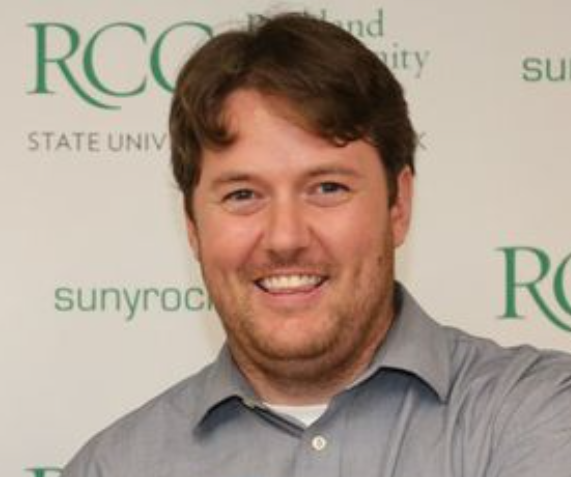
Matthew Matcovich
Associate Professor
Mathematics
- Technology Center, Room 8302
- 845-574-4797
- [email protected]
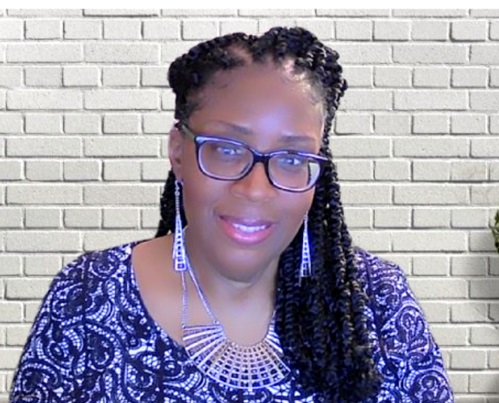
Melissa L. Roy, JD
Chief Diversity Officer & Director
Office of Diversity Equity & Inclusion
- Brucker Hall, Room 6206
- 845-574-4758
- [email protected]